
Blue Economy: Why the sea is central to Brazil’s sustainable development?
At the turn of the 2000s, the sea returned to the center of the economic, environmental, and political strategies of coastal nations. In a world defined by the energy transition, the search for food security, demand for renewable sources, and the urgent need for decarbonization, the so-called Blue Economy has become increasingly strategic—and in Brazil’s […]
- 04/03/2026
- 7 minutes
At the turn of the 2000s, the sea returned to the center of the economic, environmental, and political strategies of coastal nations. In a world defined by the energy transition, the search for food security, demand for renewable sources, and the urgent need for decarbonization, the so-called Blue Economy has become increasingly strategic—and in Brazil’s case, a national priority.
With a coastline stretching over 8,000 kilometers, an Exclusive Economic Zone (EEZ) of 4.5 million $km^2$, and a consolidated maritime industrial base, Brazil finds in the sea one of its greatest opportunities for sustainable growth. The Blue Economy concept, championed by organizations such as the United Nations (UN), proposes a development model that balances economic exploitation, environmental conservation, and social inclusion in coastal and oceanic areas.
This article analyzes how Brazil is structuring its vision for the Blue Economy, which sectors make up this ecosystem, and how maritime and port companies like Wilson Sons contribute to building a future that recognizes the ocean as a driver of innovation, competitiveness, and preservation.
Understanding the Blue Economy Concept
The Blue Economy is an extension of the concept of sustainable development applied to the ocean. Unlike the traditional economy, which often exploits natural resources with an exclusive focus on economic growth, the Blue Economy seeks to integrate profitability with the conservation of marine ecosystems and the improvement of the quality of life for coastal populations.
It includes sectors such as:
- Maritime transport and ports;
- Aquaculture and sustainable fishing;
- Offshore renewable energy (wind, tide, waves);
- Responsible coastal tourism;
- Marine biotechnology;
- Deep-sea mining (with environmental criteria);
- Marine conservation and ecosystem services.
The goal is to develop all these sectors based on innovation, science, and public policies that prevent environmental degradation, generate jobs, and contribute to climate resilience. The Blue Economy is, therefore, a systemic response to 21st-century challenges.
Ports as Engines of the Blue Economy
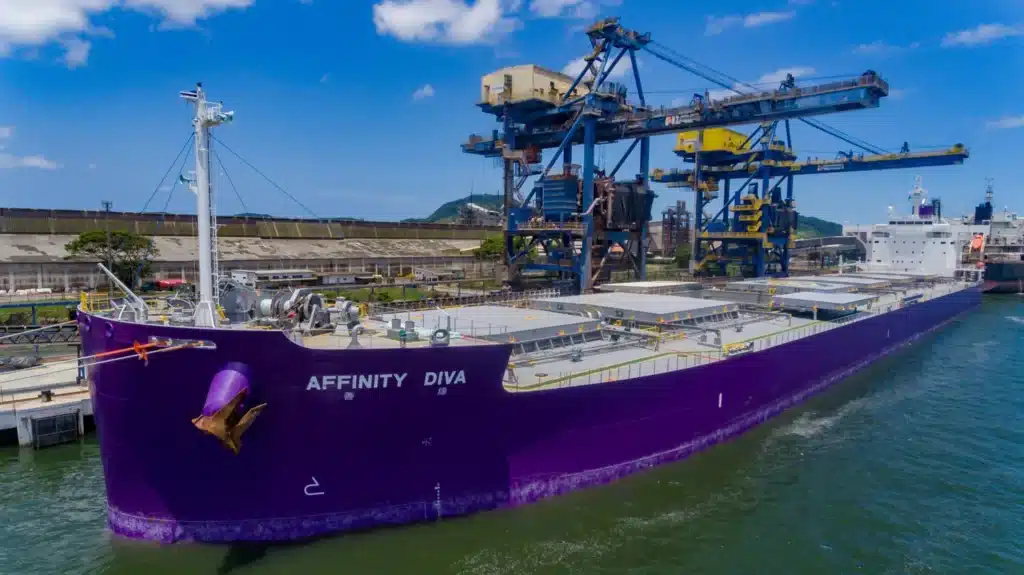
Ports are the convergence points between the land-based and ocean-based economies. They concentrate logistics chains, generate skilled employment, and serve as export platforms for Brazilian products. They are also sites of sensitive interaction with the marine environment and coastal communities.
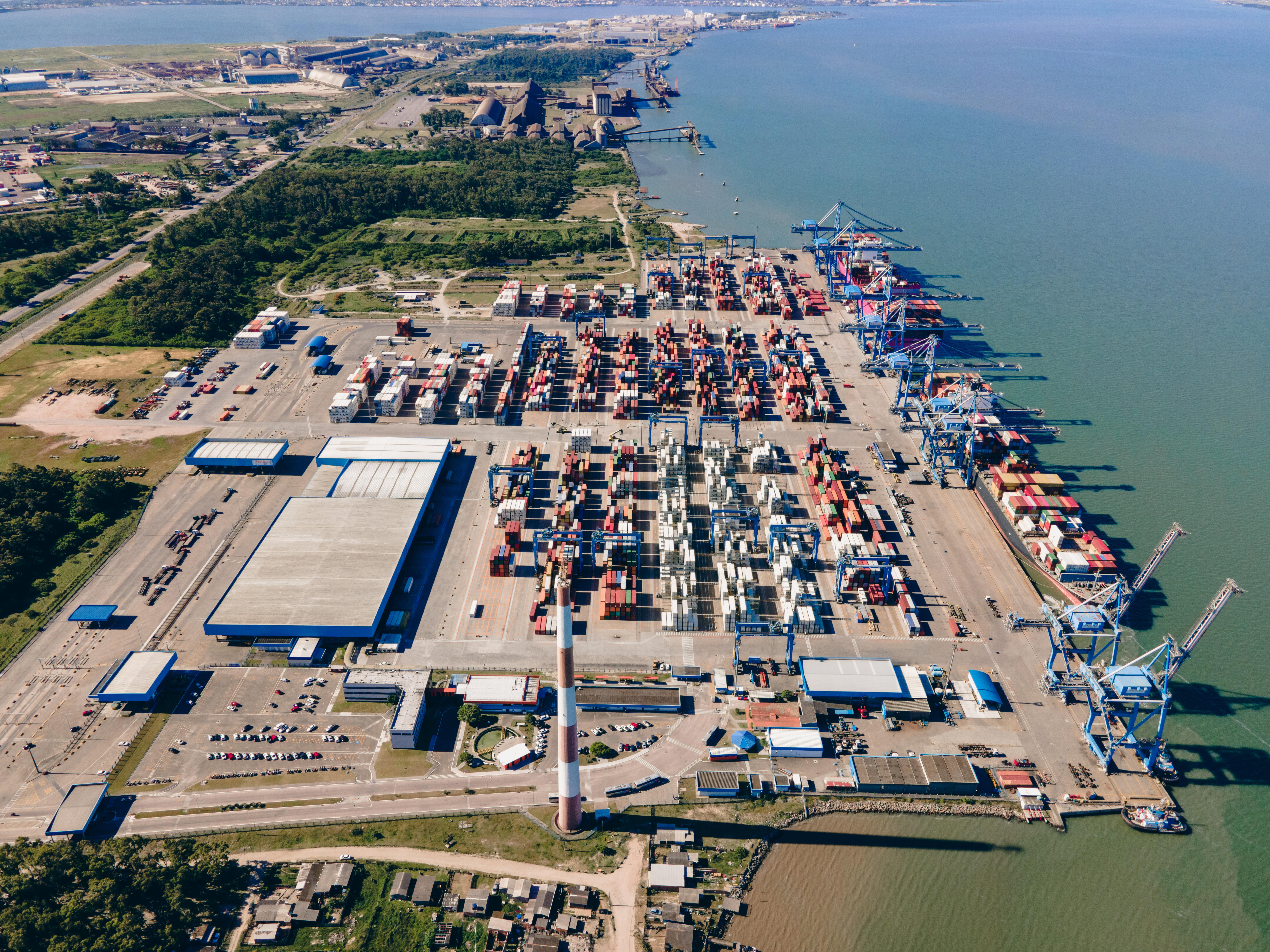
In this context, modern port management must balance logistical performance with environmental and social responsibility. Terminals such as those operated by Wilson Sons in Salvador and Rio Grande demonstrate that it is possible to reconcile innovation, efficiency, and sustainability in the port environment.
Tecon Salvador, for example, adopts emission monitoring systems, rational use of electricity, and rainwater control. Located in the heart of the Blue Amazon (Amazônia Azul), the terminal also engages with neighboring communities through educational projects and professional qualification programs, amplifying the positive impact of port activities on the regional economy.
In the south of the country, Tecon Rio Grande stands out for its investment in high solar reflectance paving, efficient infrastructure, and automated gate systems that reduce emissions and truck waiting times. The terminal’s intermodal structure allows for greater predictability in operations and reduces the logistical impact on the urban territory.
Both terminals operate with a focus on operational safety, emission reduction, and community relations. This aligns them with the logic of the Blue Economy as platforms that do not just move cargo, but generate shared value.
Energy Transition and Offshore Energy
The global energy transition requires expanding the supply of clean and renewable sources. The sea is a promising space for power generation through offshore wind farms, which are already a reality in Europe and are advancing in countries like China, the UK, the USA, and Japan.
In Brazil, the first offshore wind projects are in the licensing phase. According to the Brazilian Petroleum and Gas Institute (IBP), there are more than 170 GW in projects registered with Ibama, and the Brazilian coast shows high technical potential for offshore wind generation, particularly in the Northeast.
Ocean energy can also be extracted through currents, waves, and tides, as well as the use of ocean thermal gradients. Although these technologies are still in the pilot phase, Brazil has universities, research centers, and an industrial base that can accelerate their adoption.
Naturally, the structuring of these ventures will require the presence of tugboats, offshore support vessels, logistics bases, terminals, and integration with the onshore power grid, creating a new frontier for the maritime and port sector.
Marine Biotechnology and Blue Innovation
The sea is also a source of raw materials for medicines, cosmetics, nutrition, fertilizers, and even biodegradable polymers. Marine biotechnology is one of the most promising frontiers of the Blue Economy and demands investment in research, bioprospecting centers, and international cooperation.
In Brazil, universities such as UFRJ and USP have research lines focused on microalgae, extremophile organisms, and marine bioactives, which could be a path to accelerating sustainable development.
Wilson Sons, through its innovation hub Cubo Maritime & Port, already works to bridge the gap between startups and universities, creating an environment conducive to the emergence of solutions aligned with Blue Economy principles. Process digitization, port automation, big data, and real-time environmental monitoring are tools already being successfully applied.
A prime example is the recent, unprecedented use of green diesel in tugboats in Brazil. Approved by the National Agency of Petroleum, Natural Gas and Biofuels (ANP), Wilson Sons and its partners, Efen and Porto do Açu, completed the first successful test of green diesel in tugboats during a liquid handling operation at the Vast Infraestrutura Liquid Bulk Terminal (TLA) in São João da Barra (RJ).
“Our decarbonization agenda includes not only building more efficient tugboats but also reducing the environmental impact of our fleet of over 80 vessels.”
— Marcio Castro, Executive Director of Tugboats at Wilson Sons.
Recognizing the ocean as a vector for innovation, competitiveness, and preservation is more than an aspiration: it is a strategic necessity for a country like Brazil, whose identity, economy, and development are intrinsically linked to the sea. By structuring its vision for the Blue Economy, Brazil takes an important step toward aligning its maritime vocation with global guidelines for sustainability and technological progress.
By contributing to a smarter and more resilient logistics infrastructure, Wilson Sons supports the construction of a blue future. A future where the ocean is not just a resource to be exploited, but a driving force for a new development model—more integrated, responsible, and connected to the planet.